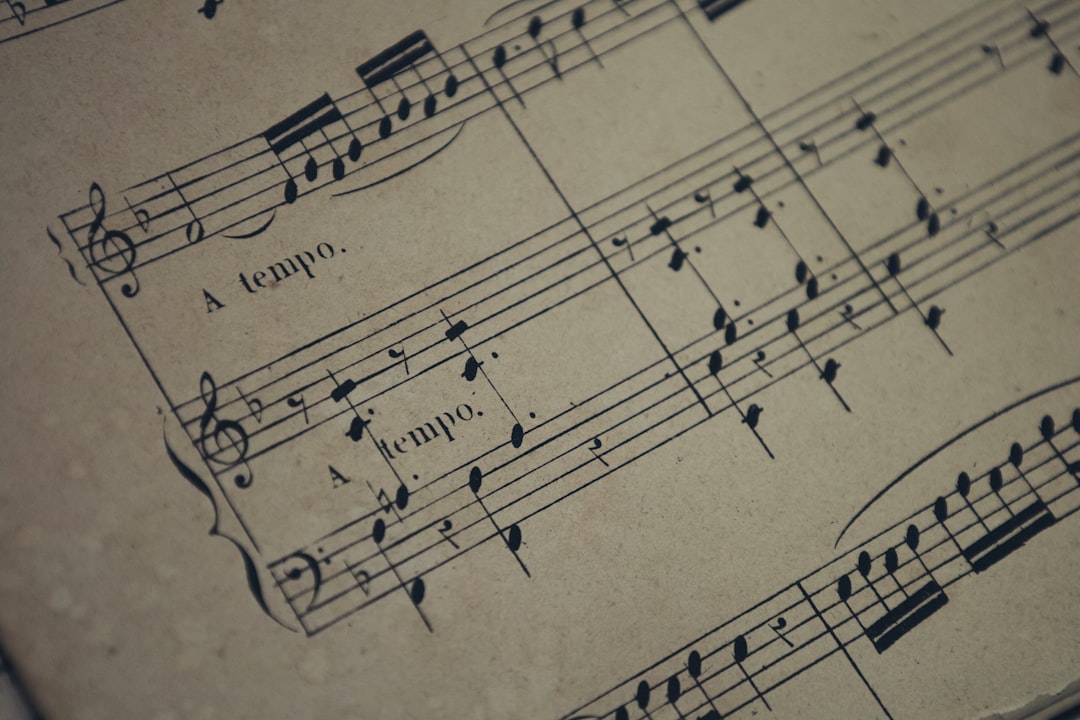
Learning basic music theory is one of the most valuable investments you can make as a musician. Whether you’re picking up your first instrument, writing your first song, or simply trying to understand how your favorite music works, a solid foundation in music theory transforms confusion into understanding. This comprehensive guide breaks down everything you need to know about music theory basics with links to free playlists for tutorials and other material that you can explore in our free downloads section.
Outline: Music Theory
What Is Music Theory and Why Does It Matter?
Free Playlists for Music Theory
How Music Theory Accelerates Your Musical Journey
Common Questions About Music Theory
What Is Basic Music Theory and Why Does It Matter?
Music theory is the language that we use when we speak about music. Just as grammar helps you construct sentences, music theory helps you to speak about melodies, harmonies, and rhythms. Therefore, it’s not about memorizing abstract rules—it’s about recognizing patterns to make speaking about music faster, easier, and more intuitive.
Once you fully understand the basics of music theory, you will also enjoy a number of other important benefits:
- Faster Learning: You will recognize patterns in songs, making it easier to learn new pieces by ear or from sheet music. This will also help you communicate the things that you love about a specific song to other listeners.
- Better Communication: You can discuss musical ideas clearly with teachers, bandmates, and your fellow musicians.
- Creative Freedom: Understanding music theory gives you tools to compose melodies by building chord progressions and/or arrange music with a more profound understanding.
- Deeper Appreciation: You’ll hear music differently by noticing the structure composers and songwriters use to craft their work.
The Foundation of Music Theory Basics
The Musical Alphabet
Music uses twelve distinct pitches that repeat across different octaves (higher and lower registers). The natural notes are A, B, C, D, E, F, and G. Between most of these notes lie sharps (#) and flats (♭), which raise or lower a note by a half step.
For more information, check out this playlist of videos that will teach you everything you need to know about this subject:
Understanding pitch is essential because every melody, chord, and harmony is built from these twelve notes. As a bonus, reading music becomes much easier once you know how they all fit together.
Rhythm and Meter
While pitch tells you which notes to play, rhythm tells you when to play them. So, rhythm helps you arrange music over time, giving it the beat and groove that makes you want to bob your head or tap your foot.
Beats are grouped into measures (also called bars), and these groups follow specific patterns called meters. The most common meter is 4/4, which means four beats per measure with a quarter note receiving one beat. Another popular meter is 3/4, often used in waltzes, with three beats per measure.
However, why should you learn more about rhythm? Firstly, because learning more about rhythm helps you keep better time, play with other musicians, and make your performance more expressive.
Scales: From Major to Minor
A scale is a sequence of notes arranged in a specific pattern of intervals. Scales are the raw material from which melodies and harmonies are built. The most fundamental scale in basic music theory is the major scale.
The major scale, for example, follows this pattern of whole steps (W) and half steps (H):
W – W – H – W – W – W – H
For example, the C major scale consists of: C, D, E, F, G, A, B, C. No sharps, no flats—just the white keys on a piano. This makes it the perfect starting point for beginners.
For more information, check out this playlist of videos that will teach you everything you need to know about this subject:
Once you understand one major scale, you can transpose the same pattern to any starting note, creating twelve different major scales. Beyond major scales, you’ll eventually explore minor scales, pentatonic scales, and modes, each with their own unique character and emotional color.
Intervals: Measuring Musical Distance
An interval is the distance between two notes. Intervals are named by counting the number of letter names they span (second, third, fourth, etc.) and described by their quality (major, minor, perfect, augmented, or diminished).
For example:
- C to D is a major second (two half steps)
- C to E is a major third (four half steps)
- C to G is a perfect fifth (seven half steps)
For more information, check out this playlist of videos that will teach you everything you need to know about this subject:
Small intervals create smooth, stepwise motion in melodies. Larger intervals add drama and contrast. Training your ear to recognize intervals is one of the most practical skills in music theory—it helps you play by ear, improvise, and harmonize melodies.
Chords and Harmony
While melody moves horizontally, chords and harmony stack notes vertically to create chords. The simplest chords are called triads, built by stacking two thirds on top of a root note.
The three basic triad types are:
- Major triad: Sounds bright and happy (e.g., C-E-G)
- Minor triad: Sounds darker and sadder (e.g., C-E♭-G)
- Diminished triad: Sounds tense and unstable (e.g., C-E♭-G♭)
For more information, check out this playlist of videos that will teach you everything you need to know about this subject:
Chords provide harmonic support for melodies. Understanding how chords function within a key—known as harmonic progression—allows you to write songs, analyze music, and accompany yourself or others on your instrument.
How Music Theory Accelerates Your Musical Journey
There are a lot of new musicians who are afraid that learning theory will make music sound boring or take away the fun of playing. But the opposite is true. Learning music theory doesn’t limit your creativity; instead, it boosts it by giving you more ways to show who you are.
Here’s how music theory helps you progress faster:
Pattern Recognition: Music is full of repeating patterns. Once you recognize common chord progressions like I-IV-V or scale patterns, you can learn songs much faster without relying solely on memorization.
Problem-Solving: When you get stuck on a difficult passage, theory helps you break it down. You can analyze the intervals, identify the scale, and practice the patterns that challenge you the most.
Composition and Improvisation: Want to write your own music? Theory gives you a framework. You’ll know which chords fit together, how to create tension and resolution, and how to develop melodic ideas.
Collaboration: Playing with others requires a shared language. When a bandmate says “let’s go to the relative minor” or “add a seventh to that chord,” you’ll know exactly what to do.
Free Video Course: Learn Music Theory Step by Step
Reading about music theory is helpful, but seeing and hearing concepts in action makes everything click. That’s why we’ve created comprehensive YouTube playlists designed specifically for beginners learning music theory.
Both playlists are completely free and designed to be watched in order, though you can also jump to specific topics based on your current needs. No ads interrupting your learning, no paywalls—just quality education accessible to everyone.
📌 English Playlist: MusePrep – Music Theory Course
Perfect for international learners, this playlist breaks down every concept with clear visuals, real musical examples, and practical exercises you can apply immediately. Each lesson is concise and focused, making it easy to fit learning into your daily routine. Whether you’re a complete beginner or refreshing your knowledge, these videos guide you through the essentials step by step.
📌 German Playlist: MusePrepGermany – Musiktheorie für Anfänger
Ideal for German-speaking beginners, this playlist offers the same high-quality instruction in your native language. Klar. Strukturiert. Verständlich. Each lesson builds on the previous one, creating a smooth learning path from absolute basics to practical application.
Common Questions About Music Theory
Do I need to learn to read sheet music?
Reading music is incredibly helpful but not absolutely required to benefit from basic music theory. Many concepts—scales, chords, intervals—can be understood and applied even if you primarily use tablature or play by ear. That said, learning to read music opens up vast amounts of written music and makes communication with other musicians easier.
How long does it take to learn music theory?
With consistent daily practice and study, most beginners develop a solid foundation in music theory within three to six months. However, music theory is something you’ll continue deepening throughout your entire musical life. The basics come quickly; the nuances reveal themselves over time.
Will learning theory make my playing sound robotic?
Not at all. Theory explains what great musicians do instinctively. Understanding theory gives you conscious control over choices that were previously random. You’ll have more creative options, not fewer. Think of theory as learning the rules of language—it doesn’t make poets robotic; it gives them tools to express themselves more powerfully.
Can I learn theory without a teacher?
Absolutely. The MusePrep YouTube courses are designed specifically for self-directed learners. The lessons are structured, clear, and include practical examples. That said, having a teacher provides personalized feedback, which can accelerate progress. Consider combining self-study with occasional lessons if possible.
Beyond the Basics: Where to Go Next
Once you’ve mastered the fundamentals of music theory, exciting paths open up:
- Chord Extensions: Seventh chords, ninths, and altered chords add color to harmony
- Modal Theory: Explore modes like Dorian, Mixolydian, and Phrygian for different flavors
- Voice Leading: Learn how to move smoothly between chords
- Form and Structure: Understand how songs are organized into verses, choruses, and bridges
- Advanced Rhythm: Study syncopation, polyrhythms, and complex meters
- Ear Training: Develop the ability to recognize intervals, chords, and progressions by ear
Each of these topics builds naturally on the foundation of music theory, expanding your musical vocabulary and creative possibilities.
Final Thoughts: Your Musical Foundation Starts Here
Basic music theory isn’t a hurdle to overcome—it’s a gateway to musical freedom. The concepts might seem abstract at first, but they quickly become intuitive when you apply them to real music. Every song you learn, every melody you write, and every performance you give becomes easier and more meaningful when supported by theoretical understanding.
Start with the fundamentals covered in this guide. Use the free MusePrep video courses to see and hear these concepts in action. Practice regularly, stay curious, and remember that every great musician started exactly where you are now—at the beginning, ready to learn.
The beautiful thing about basic music theory is that it’s truly universal. Whether you play guitar, piano, violin, or sing, whether you love classical, jazz, rock, or hip-hop, the same principles apply. Theory connects all music across genres and instruments, giving you a shared language with musicians around the world.
So pick up your instrument, open that first video lesson, and begin building your musical foundation today. The journey from beginner to confident musician starts with a single note, a single scale, a single chord—and the theory that helps you understand them all.
Ready to start? Check out the free MusePrep playlists and begin your basic music theory journey today.
Keep Learning with MusePrep
Watch our short video lessons on the MusePrep YouTube Channel—ideal for beginners learning ear training and harmony.
Subscribe now to build your ear and master the building blocks of music theory!
Subscribe to MusePrep.
Related Posts:
Understanding Seventh Chords Formula: A Simple Guide for Harmony
Understanding Chord Structure: A Simple Visual Trick for Beginners
What Is Timbre in Music? The Color of Sound
What Is a Motif in Music? The Small Idea That Builds a Symphony
Perfect Intervals Explained: The Foundation of Pure Sound in Music.
Perfect Intervals Explained: The Pure Sounds That Shape Music
What Is an Interval? Understanding the Distance Between Notes
What Is a Scale in Music? The Building Blocks of Melody.