Articles
All MusePrep articles on music theory, reading music, ear training and harmony.
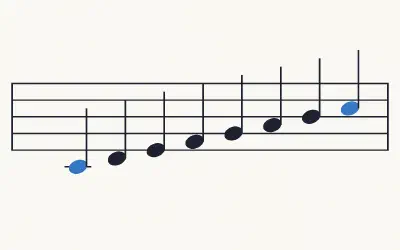
- Learn to Read Music: The C Major ScaleHow the eight notes of the C major scale sit on the staff – the easiest way to start reading music.
- Mastering Key Signatures and Modulation: New Video Series in 2026Understanding key signatures transforms the way you listen to music. They are far more than a row of sharps or flats at the beginning of a staff. A key signature establishes the tonal center, shapes harmonic direction, and gives a piece its distinctive color and atmosphere.
- Finally Understanding Rhythm: A New Video Series for Your SuccessRhythm is the heartbeat of music. You can play the right notes, use proper technique, and follow all the markings in your score—but if your rhythm is shaky, the music falls apart. Yet for all its importance, rhythm is one of the most misunderstood and under-taught aspects of music education. That’s …
- Practice Intervals the Smart Way: All MusePrep Shorts in One PlaceDiscover all MusePrep Shorts for interval training in one place. Short, effective videos to improve your ear training, intonation, and music theory skills.
- Advancing in Music Learning: Proven Strategies for Musical GrowthDiscover proven strategies for advancing in music learning. Expert guidance on practice techniques, overcoming plateaus, and accelerating musical progress.
- How to Identify the Key of a PieceLearn how to identify the key of a piece using key signatures, final chords, and tonal centers. Practical methods with examples from Bach and Beethoven for music students.
- Dvořák’s Ninth Symphony: Musical Language and Cultural Synthesis in LargoAn in-depth analysis of Dvořák’s Ninth Symphony, focusing on the Largo movement’s pentatonic melody and its synthesis of American and European musical traditions.
- Understanding Basic Music Time Signature: A Guide for BeginnersWhat does a basic music time signature tell you? This guide explains how to read 4/4, 3/4, and 6/8 time signatures with simple counting examples.
- What Is the Circle of Fifths? A Beginner-Friendly Explanation.What is the circle of fifths? Learn how key signatures work, why sharps and flats appear, and how major and minor keys are connected.
- 2026: The Year You Finally Understand MusicStart 2026 with a music theory challenge. Learn notation, scales, chords, and rhythm at your own pace with 43 beginner-friendly videos. Make this your year.
- Why Musicians Give Up Early (And How a Music Routine Planner Helps)Struggling with inconsistent practice? Learn how a music routine planner helps you build a realistic daily practice routine you’ll actually stick to.
- Easy Key Signature Guide: How Sharps and Flats Actually WorkEasy key signature guide for beginners. Learn how sharps and flats work, why they exist, and how to read key signatures with confidence.
- About the Creator of Silent Night: A Story of Wartime PoetryLearn about the creator of Silent Night. Discover who wrote the lyrics and music, how the famous carol was created, and why it became a global classic.
- Identify Intervals Steps: How to Master Musical DistanceLearn how to identify intervals step by step. This guide explains clear interval identification steps for beginners using simple rules and practical examples.
- Relative Keys Explained for Beginners: Major and Minor Keys Made SimpleRelative keys explained in a simple way. Learn how major and minor keys are connected, how to identify them, and why they matter in music theory.
- The Exotic Minor Scale in Music ExplainedExplore the exotic minor scale in music. Learn its structure, sound, and expressive power with a clear example from Borodin’s In the Steppes of Central Asia.
- Perfect Intervals Types Explained SimplyLearn the perfect intervals types in music theory. Discover unison, fourth, fifth, and octave with clear explanations and practical examples for beginners.
- Basic Musical Keys Explained for BeginnersLearn the basics of music theory with this beginner-friendly guide to basic musical keys. Understand major and minor keys, key signatures, and how to use them.
- Music Theory for Beginners Online: Learn to Read Music in 7 DaysLooking for music theory for beginners online? Learn to read music in 7 days with a free, beginner-friendly YouTube course.
- Understanding Pentatonic Scale Notes: Simple Guide for MusiciansUnderstanding pentatonic scale notes is essential for anyone learning music theory, improvisation, or songwriting. The pentatonic scale appears in blues, rock, pop, folk, jazz, classical music, and world traditions. Its simplicity and versatility make it one of the most widely used scales in the …
- Advanced Chord Positions: Your Complete Guide to Modern HarmonyDiscover advanced chord positions and learn how sophisticated voicings, spacing, and extensions can transform your harmony. A clear guide to mastering advanced chord positions for richer, modern music.
- Understanding the Ascending Melodic Minor Scale: A Guide for MusiciansLearn the ascending melodic minor scale with a clear explanation, examples, and practical tips. Understand how the ascending melodic minor scale shapes melody, harmony, and modern improvisation.
- Exploring Different Seventh Chords Styles: A Complete GuideExplore different seventh chords styles and learn how each one shapes harmony, color, and mood in music. A clear guide with examples for songwriters and musicians.
- Basics of Chord Inversions: A Beginner’s GuideLearn the basics of chord inversions in a clear, simple guide. Discover how inversions shape harmony, improve voice-leading, and create smoother progressions while keeping the same chord identity.
- Perfect Intervals Explained: A Complete Guide for MusiciansLearn perfect intervals explained in clear, simple steps. This complete guide covers unison, fourths, fifths, and octaves, with examples, theory tips, and practice strategies to strengthen your ear and improve your musicianship.
- Basic Music Theory: Beginner’s Guide + Free YouTube CourseBasic music theory builds the foundation for everything you play. It helps you read music. It helps you write melodies. It helps you understand how songs work. This guide explains the essentials in simple steps. It also links to a free YouTube course in English and German for deeper learning.
- Understanding Seventh Chords Formula: A Simple Guide for HarmonyLearn the understanding seventh chords formula in a clear, simple way. This guide explains each chord type, its interval structure, and how to apply the formulas in any key for better harmony and songwriting.
- Chord Construction Steps: How to Build Chords Using the Snowman MethodLearn the essential chord construction steps with a simple snowman visual. Discover how stacking lower, middle, and upper thirds helps you build clear major, minor, diminished, and augmented triads. Perfect for beginners in music theory.
- Understanding Chord Structure: A Simple Visual Trick for BeginnersLearning chords can feel abstract at first. Notes stack on top of each other, intervals matter, and suddenly you are told you need to “hear” thirds. For beginners, this is a lot. A simple image helps: think of chords as little snowmen.
- Why Music Theory Lessons Online Are the Best Way to Learn in 2025.Learn music theory online with flexible, expert-led lessons. Master scales, harmony, rhythm, and analysis at your own pace with structured courses and practical exercises.
- What Is a Melody? How Notes Become Music.Learn what a melody is and how it gives every song its recognizable tune. A clear beginner’s guide to melodic shape, contour, and phrasing.
- What Is a Chord in Music? The Building Blocks of Harmony.Learn what a chord is and how chords shape the sound of music. A beginner-friendly guide to triads, major and minor chords, and basic harmony.
- What Is Timbre in Music? The Color of SoundHave you ever wondered why a piano and a violin sound so different even when they play the exact same note? The answer lies in one of music’s most fascinating yet often overlooked elements: timbre in music. Often described as the “color” of sound, timbre is what gives each instrument its unique …
- What Is a Motif in Music? The Small Idea That Builds a SymphonyHave you ever wondered why certain pieces of music stick in your head long after you’ve heard them? Why does Beethoven’s Fifth Symphony feel instantly recognizable after just four notes? Or why can you identify the hero’s theme in Star Wars within seconds? The answer lies in one of the most …
- Major and Minor Intervals Explained: The Sound of Emotion in MusicLearn the difference between major and minor intervals in music theory. Understand how they shape emotion and discover easy examples for beginners
- Dynamics in Music: From Pianissimo to FortissimoLearn how dynamics bring music to life. Understand markings like p, f, and cresc. with examples for beginners.
- Perfect Intervals Explained: The Foundation of Pure Sound in MusicWhat are perfect intervals in music? Learn why the fourth, fifth, and octave sound so pure and stable — with easy examples and listening tips.
- Perfect Intervals Explained: The Pure Sounds That Shape MusicDiscover what perfect intervals are and why they sound so pure. Learn how to identify perfect fourths, fifths, and octaves in this beginner’s guide to music theory.
- What Is an Interval? Understanding the Distance Between Notes.Find out what intervals are and how they give music structure and emotion. Simple explanations with clear examples.
- What Is a Scale in Music? The Building Blocks of Melody.Learn what a scale is and how it shapes every melody. A beginner-friendly guide to major and minor scales in music theory, so you can answer the question: what is a scale in music.
- Musical Intervals Explained: What Prime, Second, and Third Really MeanLearn what musical intervals are and where their names—prime, second, third—come from. A simple, beginner-friendly guide to interval names and Latin origins.
- Borodin In the Steppes of Central Asia: A Musical Journey Through Sound and StoryDiscover the story and structure of Borodin’s In the Steppes of Central Asia. Learn how melody, orchestration, and rhythm create vivid musical imagery.
- Master the Major Scale: The Simple Pattern Behind Every Great SongLearn the major scale step by step. Discover the simple pattern behind every melody and start mastering music theory with ease.
- Top 5 Mistakes Music Beginners Should AvoidAvoid the most common mistakes beginner musicians make. Practical tips to save time and frustration in your learning journey.
- Whole Steps and Half Steps in Music: The Easiest Way to Understand ScalesLearn the difference between whole steps and half steps in music. Simple explanations and examples for beginners who want to understand scales and melodies.
- Half Steps and Whole Steps in Music – Explained with ExamplesLearn what half steps and whole steps are in music theory. Understand how they form scales, intervals, and melodies in Western music.
- Morning Mood by Edvard Grieg—Analysis, History, and Cultural SignificanceFew pieces of classical music capture the essence of a new day quite like Edvard Grieg’s Morning Mood. This enchanting orchestral work, with its instantly recognizable melody and luminous orchestration, has transcended its theatrical origins to become one of the most beloved compositions in the …
- How to Stay Motivated When Learning Music: Music Practice MotivationStruggling to keep practicing music? Learn proven strategies to stay motivated and enjoy the process with this music practice motivation.
- What Is a Chord Progression? Chord Progressions for Beginners.Learn what chord progressions for beginners are and how you can use them to start writing your own songs. Easy tips for beginners.
- Sight-Reading for Beginners: How to Read Music FasterImprove your sight-reading for beginners skills with beginner-friendly exercises. Learn how to read music notes more easily.
- How to Compose Your First Melody: Beginner’s Guide. Beginner Melody WritingLearn beginner melody writing with our step-by-step guide. Discover the 3 building blocks of melody composition, avoid common mistakes, and compose your first melody today using practical exercises and expert tips.
- Beginner Chords 101: Learn Your First Chords in MinutesMaster beginner chords C, G, and Am in minutes with our step-by-step guide. Learn easy chord progressions and start playing real songs today – perfect for guitar beginners!
- Half Steps in Music: Why Semitones Matter for Scales, Harmony, and EmotionDiscover the power of half steps in music. Learn how semitones shape scales, harmony, and emotion with clear examples and practice tips.
- Best Digital Tools for Beginner Musicians: Your Complete Guide to Success.Discover the best free and paid digital tools that help beginners practice, learn music theory, and compose songs with ease.
- Why Daily Music Challenges Boost Your LearningTransform your musical journey with consistent, bite-sized practice sessions that build momentum and accelerate progress
- 5 Romantic Era Composer Highlights You Should Know.Discover 5 essential Romantic era composers who shaped classical music history. From Liszt’s virtuosity to Tchaikovsky’s emotional storytelling – explore their signature works and lasting influence on music.
- Pentatonic Scale for Beginners: How to Play and Improvise with Just 5 NotesDiscover the pentatonic scale for beginners. Learn how to play, practice, and improvise with just 5 notes to create melodies that sound great in any style. When you first start learning music theory, scales can feel overwhelming. Major, minor, chromatic, modes — the list seems endless. But there is …
- Dreamlike Music on the Whole-Tone Scale: Musical DreamscapesDiscover the whole-tone scale’s secrets to creating dreamlike music. From Debussy’s floating harmonies to jazz innovations – unlock ethereal soundscapes in your compositions.
- Debussy Voiles Interpretation: A Complete Analysis of Structure and StyleDiscover Debussy Voiles interpretation with a clear analysis of form, harmony, and meaning. Learn how this Impressionist prelude captures mystery and motion.
- Variants of the Minor Scale: A Guide for MusiciansWhen most beginners learn scales, they start with the major scale. But the world of minor scales is much richer and more versatile. Unlike the major scale, which has a single standard form, the minor scale comes in several variants. Each has its own color, function, and musical use. In this post …
- The Complete Guide to Whole Tone Scales: Theory and Musical MagicDiscover the magic of the whole tone scales in music theory. Learn how to build it, recognize its unique sound, and use it in improvisation and composition for jazz, classical, and contemporary music.
- Composer Highlight: Clara Schumann Biography – Beyond the NotesDiscover Clara Schumann’s remarkable life as pianist, composer & educator. Explore her musical innovations, lasting legacy & influence on classical music.
- Chromaticism in Flight of the Bumblebee: Rimsky-KorsakovDiscover how chromaticism in Flight of the Bumblebee creates its iconic buzzing energy. Learn Rimsky-Korsakov’s genius technique and practice tips for mastering this classic piece.
- The Chromatic Scale: Theory, Patterns, and Practice TipsLearn what the chromatic scale is, how it’s built, and how to practice it effectively — with clear examples, notation tips, and musical applications.
- Why Every Music Student Should Learn to Analyze—Music Analysis for StudentsMusic analysis isn’t just for academics — it helps students play with more expression and understanding. Here’s how to introduce it gently and clearly.
- Connecting Music Theory to Real Repertoire: Make It Stick with Theory in RepertoireLearn how to apply theory in repertoire effectively! Discover practical strategies for connecting music theory concepts to real pieces students are playing. Make theory stick through meaningful musical connections that enhance both performance and understanding.
- Types of Minor Scales Explained: Natural, Harmonic, and Melodic MinorWhen you think of the types of minor scales, you might picture music that’s a little sad, dramatic, or mysterious. But did you know there’s not just one kind of minor scale? In fact, there are three main types of minor scales — each with its own unique flavor and use.
- Connecting Music Theory to Real Repertoire: Practical Music TheoryDiscover how to make practical music theory meaningful by connecting concepts to real repertoire. Learn effective strategies for applying theory to pieces students are already playing, from choosing teachable moments to encouraging discovery-based learning.
- How Much Theory Do Young Musicians Really Need? Music Theory for KidsShould young learners study advanced theory? Learn how to balance foundational knowledge with musical enjoyment — and when to introduce more complex ideas for music theory for kids.
- What Is a Minor Scale? A Clear Guide for Beginners.What is a minor scale? Explore all 3 types with easy theory tips, note patterns, and sound examples for beginners and music students.
- The Secret to Teaching Music Theory to Absolute BeginnersNew to teaching theory to total beginners? This guide will help you simplify key concepts and build confidence from day one.
- Teaching Music Theory Without a Textbook: Creative Music Education.Textbooks can be helpful — but they’re not essential. Discover creative, hands-on ways to teach music theory using real music, movement, and active listening.
- How to Understand the Major Scale Steps – Music Theory Basics for BeginnersLearn how the major scale works with clear steps and examples. This beginner-friendly guide shows you how to build, hear, and play major scales on your instrument – based on our YouTube video tutorial.
- Back to School 2025: Music Theory Back to School Essentials.Find the best music theory back to school essentials—from beginner keyboards to headphones and tools that support focused, effective learning.
- Special Needs Music Resources: Making Concepts Accessible for All LearnersDiscover essential special needs music resources and inclusive strategies to make music theory accessible for all learners. Expert tips for educators supporting diverse students in music education.
- Major Scale Concepts for Beginners: A Complete GuideLearn the essential major scale concepts for beginners. This easy guide explains major scales, scale degrees, and patterns to help you build a solid foundation in music theory.
- The Core Music Theory Basics Every Student Should UnderstandMaster the essential music theory basics every student needs: intervals, scales, chords, and cadences. A focused guide for teachers and learners to build strong musical foundations without overwhelm.
- From Reading Notes to Hearing Them: Building Inner Hearing in Young MusiciansTrue musicianship means more than reading music — it means hearing it in your head. Learn how to foster inner hearing and deeper understanding in students.
- Why Music Theory Doesn’t Have to Be Boring: Music Theory in the ClassroomMusic theory in the classroom gets a bad rap for being dry and difficult. Discover how teachers can make it engaging, practical, and fun with real classroom examples.
- Beginner Music Composition: How to Compose Your First MelodyLearn beginner music composition with our step-by-step workbook. Create your first 8-bar melody, add basic chords, and master variation techniques. Perfect for beginners wanting to start composing music today.
- Definition of Music Staff: A Complete Guide to Staff Notation TermsLearn everything about the definition of music staff notation terms. This guide will leave you motivated and excited about your musical journey!
- Difference Between Octaves: Your Full Guide to OctavesOctaves vs scales: what is actually the difference? Learn everything there is to know about the difference between octaves.
- The Complete Musical Symbols Guide: Mastering Music NotationMusic notation is a universal language. This comprehensive musical symbols guide helps you read music fluently and understand it deeply.
- Beginner Practice Routine: Mastering the Natural Sign in MusicLearn how to practice the natural sign in music with this simple routine for beginners. Train your eyes, ears, and fingers with real sheet music examples.
- Natural Sign in Music: Complete Guide to Understanding Musical NotationUnderstand the natural sign in music, canceling sharps and flats, and get a clear intro to enharmonic notes—perfect for piano beginners and music learners.
- Understanding Accidentals Music Theory: Your Complete Guide to Sharps and FlatsLearn what accidentals music theory are and how they change the pitch of a note by a half step. In this beginner-friendly post, we explain sharps (♯), flats (♭), and how to label altered notes correctly on the piano. Perfect for music theory students and piano learners!
- Enhancing Music Skills With Half Steps: Introduction for BeginnersDid you know that enhancing music skills with half steps is like discovering a musical superpower? These tiny intervals are the building blocks that separate beginner musicians from those who truly captivate their audience!
- Musical Octaves Explained: Learn How to Organize PitchesMusical octaves explained: Learn to organize musical notes into pitch ranges, from the great octave to the three-lined octave.
- Learn to Read Notes: Mastering Pitches in Treble and Bass ClefDiscover how to identify pitches in the treble and bass clefs and learn to read notes. Learn note placement, ledger lines, and helpful mnemonics of sight-reading.
- Musical Notation Basics: Understanding Natural Notes and ClefsUnderstand natural notes and clefs. Learn to read treble and bass clefs and build a solid foundation in musical notation.
- Musical Staff Basics Guide: Understanding the Basics of NotationLearn the musical staff basics for reading and writing music. Understand how clefs and ledger lines help with pitch and start learning.